Oyster Gardening

Status
PLANNING IN PROGRESS COMPLETE
30%
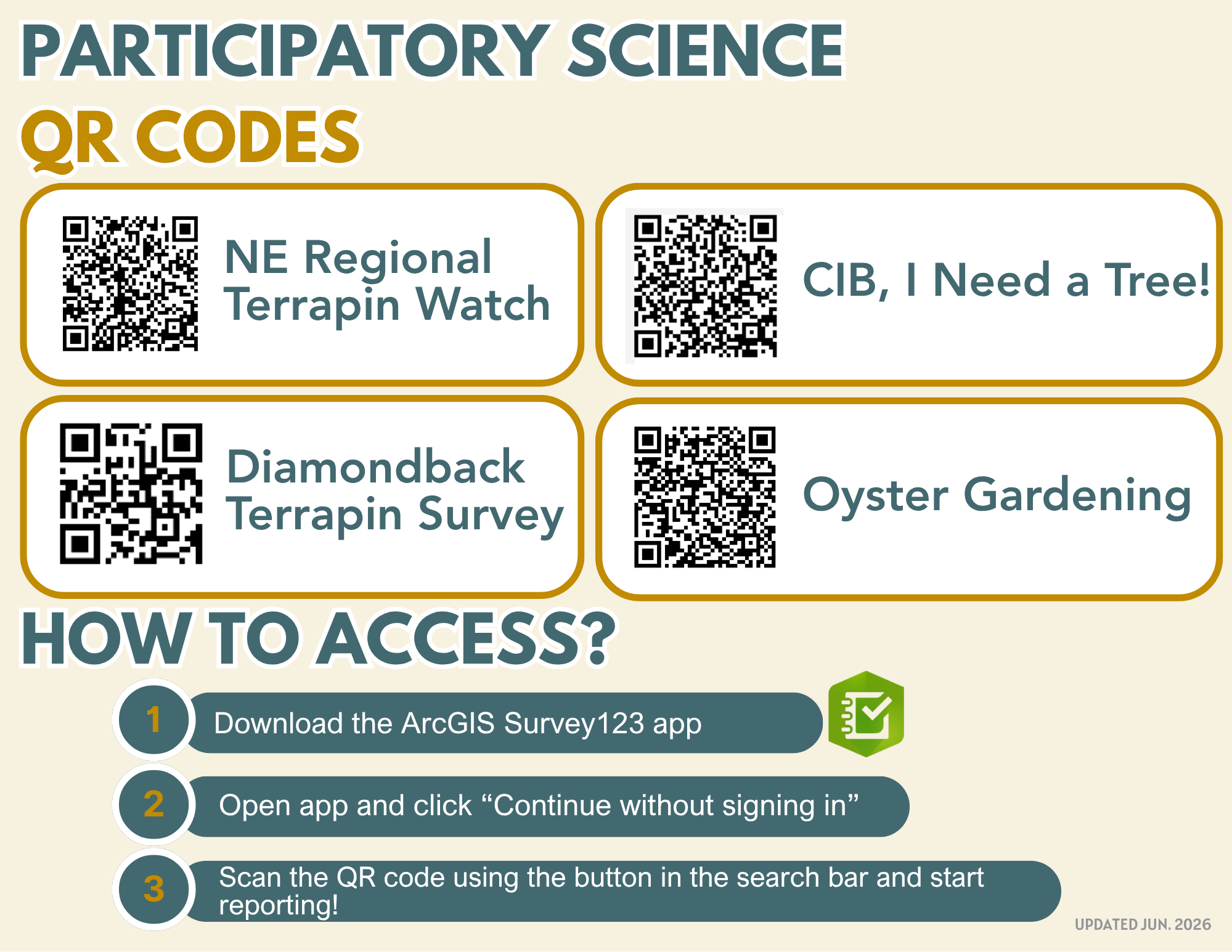
Do you want to be considered for the program? Please fill out our interest form. Gardeners will be selected at random from eligible locations, based on the number of gardens available, and notified when oysters are available for pick up.
OYSTER GARDENING INTEREST FORM

OUR NEXT OYSTER GARDENING PICKUP WILL BE MID-SUMMER 2026.

About the Program

The Center’s Oyster Gardening Program is a community-based enhancement initiative that invites waterfront property owners to help restore the Inland Bays by raising oysters from their docks and bulkheads. The Center provides juvenile oysters and all necessary gear, while volunteer “gardeners” care for and continuously grow the oysters year-round.

As the oysters grow, the Center and our partners may monitor oyster health, collect spat from the gardens, and use mature oysters in other projects to increase the number of wild oysters in the Inland Bays. These gardens also provide valuable data that helps us better understand oyster growth, water quality, and the long-term success of restoration efforts in our coastal ecosystem.

The Oyster Gardening Program began in 2003 through a generous grant from the National Fish & Wildlife Foundation’s Five-Star Restoration Challenge Grant Program and is now sustained entirely through donations and community support.

Created as a collaborative effort between the Center and the Sea Grant Marine Advisory Program, the initiative brought together scientists, partners, and volunteers with a shared goal of increasing the Eastern Oyster (Crassostrea virginica) count in the Inland Bays. Oyster enhancement is a key action identified in the Comprehensive Conservation and Management Plan and plays an important role in improving the health of our coastal ecosystem.

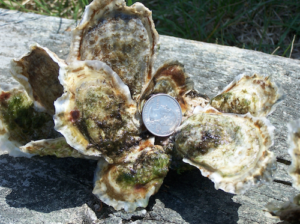
The Oyster Gardening Program invites community members to care for oysters year-round from their own docks and waterfront properties. Gardeners often begin with small juvenile oysters, known as “spat,” which grow over time and can reach maturity within several months to a few years, depending on environmental conditions.

Successful gardeners practice simple husbandry techniques such as keeping cages clean of algae and sediment, protecting oysters from winter ice damage, and observing the many fish and marine organisms that benefit from oyster habitats. Each gardener manages their own growing site, with oyster spat and equipment provided by the Center, helping create a network of community-supported restoration efforts throughout the Inland Bays.

The oyster larvae used in the program are primarily produced at the University of Delaware’s Marine Science and Policy Lab using broodstock lines selected for resistance to MSX and Dermo, two diseases that commonly impact oyster populations.

In the hatchery, millions of microscopic oyster larvae are introduced to recycled oyster shells, mimicking the natural “setting” process that occurs in the wild. By early summer, these shells — now covered with young, fingernail-sized oysters known as spat — are distributed to gardeners throughout the Inland Bays for placement in their cages.

Many of the oyster shells used in this process are collected through the Center’s Don’t Chuck Your Shucks oyster shell recycling program, creating a full-circle restoration effort that supports healthier oyster populations and cleaner waterways.

Oyster Gardening oysters were not grown for food and are NOT SUITABLE for human consumption

Objectives

  • Research on oysters and prove that oysters can grow great anywhere in our Inland Bays;
  • Improve water quality through various restoration efforts;
  • Protect young spat, giving them a chance to grow through better conditions;
  • Create habitat for other marine species which are the base of the food chain for fish, crabs and other species;
  • Educate volunteers and the general public about the ecology and value of a healthy population of Inland Bays oysters.

ArcGIS Survey123 Resources

Frequently Asked Questions:

What's new in the oyster gardening program?

We are excited to once again offer oysters through the Oyster Gardening Program after successfully meeting the goals of our previous Oyster Gardening program. The gardeners will notice a few updates and changes in our program. Participants can now keep their oysters year-round, and cages have been updated with a fully enclosed design and hinged top for easier maintenance. Cages will initially be filled to about one-third capacity to allow room for oyster growth and keep the setup manageable. The Center, along with the Department of Natural Resources, will be requiring the gardeners to track their oyster garden’s progress through an online reporting system alongside routine biweekly cleaning and care. Selected year-round residents may participate for an annual fee of $50 per cage. Pearl Society donors who contribute an additional $200 will receive extra program perks, including a dock sign recognizing their support. The program is funded entirely through donations and operates through a permit from DNREC with the support of our dedicated gardeners and volunteers.

Delaware’s Inland Bays have a very small natural population of oysters. The Center believes that oysters were at one time, and hopefully will again be, a thriving and important component of Inland Bays’ ecology. The goal of our Shellfish Restoration Program (which includes the Oyster Gardening efforts) is to restore a viable population of oysters to our local waterways, thereby creating critical benthic (bottom) habitat and increasing the filtering capacity of the bays’ shellfish population.

Oysters are like the building blocks of the benthic community and create very important reef habitats for other organisms. Some of the many important species you will find around an oyster reef include: barnacles, mussels, bryozoans, worms, algae, plankton, as well as several kinds of fishes and crabs. Our oysters are not meant for harvest but for restoration purposes only. Oysters are also filter feeders; they can remove tiny one-celled plants called phytoplankton and other small particles from the water and improve water quality.

Yes. Special cages and baskets were built to hold the oysters. We don’t have to worry about oysters swimming away, but the cages helped contain the growing spat for scientific study and survival. The cages allowed a good supply of food and oxygen to reach the oysters near the surface. They also reduced the threat from predators and sedimentation. The cages and baskets make it easy for the volunteers to maintain the oyster garden populations. The goal is to provide the juvenile oysters a protected environment, which will result in more successful survival rates.

Baskets with wire inserts are ideal for volunteers with access to waterfront property. Each “gardener” is supplied with one basket that is accessible through a hinge top or side. The gardener will be responsible for replacing the zip ties on the hinge top/side to remove and count oysters. The dimensions of the cages are around 2′ x 3′. Oyster “spat” are placed inside the insert, which rests inside the cage. Each insert has a carrying capacity of approximately 75-160 shells with spat. The cages are suspended from gardeners’ piers, docks, or bulkheads. When necessary, they can be lifted from the water in a similar manner to crab traps. The cage should hang a few inches to a foot off the bottom of the bay.

Yes, 6 volunteers signed on as participants in our pilot 2026 oyster gardening project. We are hoping to expand the number of our oyster gardeners as we continue the program. They maintain the oysters and keep the cages clear of bio-fouling. Volunteers have also assisted with measuring and recording oyster growth and mortality as well as water quality parameters, such as temperature and salinity. The volunteers are involved for several reasons: to play a hands-on role in oyster restoration, to educate their neighbors and friends about the benefits of a healthy oyster population, and to provide a diverse array of study sites throughout the Inland Bays system.

The juvenile oysters, known as “spat-on-shell”, come from a disease-resistant line of larvae produced at the Rutgers University Haskin Shellfish Laboratory.  “Spat” are tiny free-swimming larval oysters that attach themselves (in the tens to hundreds!) on spent oyster shells, also called “cultch”, collected by the Center’s “Don’t Chuck Your Shucks” shell recycling program, at the University of Delaware’s College Earth, Ocean and Environment’s campus in Lewes. The “spat” are then transferred to the wire inserts, which are placed inside the baskets.

Oyster Gardening oysters are NOT SUITABLE for human consumption and we prohibit our gardeners from consuming the oysters. These oysters are for restoration purposes only. If we are successful in our efforts to restore oysters to the Inland Bays, there may be future opportunities for recreational harvesting of oysters for personal consumption.

Oyster Gardening oysters have been planted in rip rap located throughout the Inland Bays. Some have been used in various research projects. In the future, the Center envisions using many of the oysters in Living Shorelines. Also known as “soft-armoring”, this technique mimics natural shoreline features to reduce shoreline erosion. Research indicates that Living Shorelines improve desirable aquatic habitat (fish and crabs!), reduce nutrient inputs into the Inland Bays, and are often more resilient than traditional hardened shoreline techniques.

Contact the Program Assistant

mfrady@inlandbays.org