![]() |
|||||||||||||||||
|
|
|||||||||||||||||
|
News from the watershed:
CIB In The News - Spring 2009
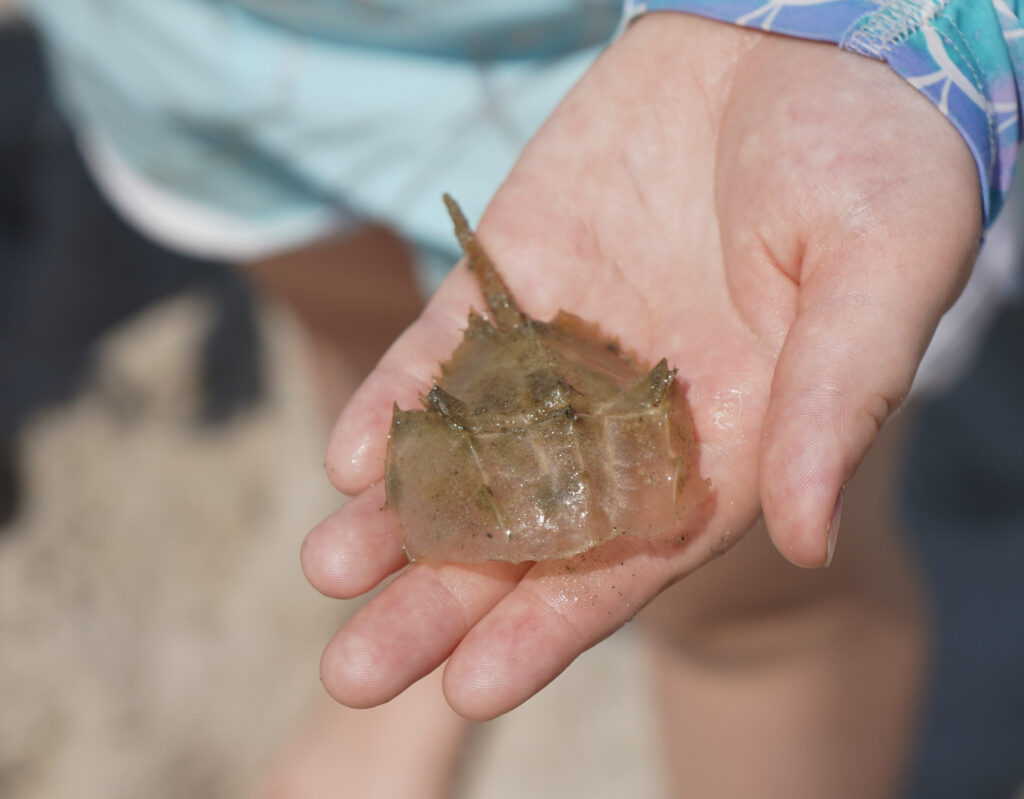
Inland Bays Journal: CIB Annual Report for 2008 In this ReportMore News From The Inland Bays... Volunteer Meeting for the 2009 Terrapin Nesting Season Scheduled for May 21st All those interested in becoming a TERP (Terrapin Education and Rescue Program) Volunteer for the 2009 Diamondback terrapin nesting season are invited to attend a meeting on Thursday, May 21st at 6 p.m. at the Delaware Center for the Inland Bays located in Delaware Seashore State Park on the north side of the Indian River Inlet Bridge behind the Coast Guard Station. There will be a short presentation and light refreshments will be provided. This will be the fifth season for the CIB Terrapin Education and Rescue Program (TERP), a project to raise public awareness about the plight of the Diamondback terrapin, and recruit volunteers to help maintain the terrapin fences and patrol the highway to assist those animals that come onto the highway. For more information contact E.J. Chalabala at 226-8105 or at restoration@inlandbays.org "1000 Rain Gardens for the Inland Bays” Campaign to be Launched this Spring This spring, the Center for the Inland Bays will launch a campaign to create 1,000 rain gardens in the Inland Bays Watershed. According to Sally Boswell, Education and Outreach Coordinator for the Center for the Inland Bays, the idea was inspired by the “10,000 Rain Gardens for Kansas City” program launched a few years ago. "We thought 10,000 rain gardens might be a little ambitious for our 321 square mile Inland Bays watershed, but 1,000 seems very doable.” “Our goal is to work with partners to promote the creation of 1,000 rain gardens, not just in backyards and gardens, but at town halls, schools, churches, and in communities through Homeowners Associations. According to the Center for Watershed Protection, stormwater has become one of the biggest threats to our waterways. “To improve water quality in our Inland Bays, we need to start thinking about rainwater as a valuable fresh water resource, not a waste product to be disposed of as quickly as possible,” said Boswell. For years, the standard practice for managing stormwater has been to get it off of our driveways, parking lots and streets as quickly as possible and into a storm drain which would channel it into a stream and then into our Bays. But this practice has caused many problems for our rivers, streams and bays. The huge volume of water entering a stream from a drainpipe during a storm event scours out streams, destroys stream habitat and causes erosion of stream banks. In addition, stormwater off of roadways and parking lots carries with it all the pollutants that it picks up along the way, including gasoline and oil, toxic substances such as heavy metals, pesticides, herbicides and hydrocarbons, and nutrients from fertilizers, leaks from sanitary sewers and animal waste. As the Inland Bays watershed becomes more urbanized, there is a higher percentage of impervious surface; roofs, parking lots and roadways; and a smaller percentage of land where the water can soak into the soil. So how can rain gardens helps solve this problem? When we minimize runoff and the pollutants associated with it, we protect water quality. According to the Center for Watershed Protection, a single house with a 1,000 square-foot roof yields 600 gallons of water from a 1-inch rainstorm. Rain gardens are a sustainable and economical way of dealing with rainfall as nature intended. The soil and plants absorb water and filter pollutants and allow the water to percolate into the soil rather than go down a storm drain. And they’re very efficient. Rain gardens absorb 30% more water than the same size area of lawn. Free Workshops on Maintaining Stormwater Management Ponds Property owners living in a community or development in Sussex County who want to learn more about how to maintain stormwater ponds and learn about options for open space management are encouraged to attend a free, two-hour workshop being offered April 15th in Lewes and April 29th in Georgetown. The same information will be covered at both workshops. The workshops begin at 6:00 p.m. Preregistration is required; to register for one of the workshops, or for more information, contact the Sussex Conservation District at 302-856-7219. “With springtime right around the corner, we anticipate a lot of interest and questions from homeowners and community associations about what they can do to create habitat, help enhance water quality, and decrease the amount of mowing they have to do,” said Eric Buehl, Habitat Coordinator with the Center for the Inland Bays. “Stormwater management areas are very effective at controlling flooding and removing pollutants, but they need to be maintained,” said Beth Krumrine, Environmental Scientist with DNREC’s Sediment and Stormwater Program. Many residents don’t know who is responsible for their stormwater management ponds. In most cases, the maintenance of these facilities is the responsibility of the property owners or the homeowners’ association; or a maintenance corporation. Some associations seek professional support while others choose to manage them on their own. Jessica Watson, Sediment and Stormwater Program Manager with the Sussex Conservation District, said that the workshops are intended to give homeowner’s options and ideas, “It is not our intent to turn property owners into pond-maintenance experts; however, we do want to provide them with the general knowledge of why the ponds are there, and where to go for technical assistance regarding maintenance.” Center for the Inland Bays Honors Local Student with Science Award Kristin Cooper, a 10th grade student at Sussex Central High School in Georgetown, was the 2009 recipient of the Center for the Inland Bays Special Award at the 17th Annual Sussex County Science Fair held on March 3 at the Biden Center in Cape Henlopen State Park. The award is given to the science fair project that best reflects the mission and work of the Center for the Inland Bays. Her topic: Polluted vs. Healthy Ponds.For her project, Kristin did a study of three local ponds: Trap Pond, Ingram Pond and Morris Mill Pond to determine the comparative health. Each pond was sampled in three locations and tested for PH, alkalinity, and hardness; each being indicators of the health of the freshwater ecosystems. Her interest in the health of the ponds was prompted by fishing trips with her father. She had noticed agricultural and recreational sources of pollution at the ponds, especially Trap Pond and wondered how healthy the fish were in each. Kristin plans to continue her pond study and hopes to enroll in AP Environmental Science at Sussex Central next year. Her mentor on the project was Elaine Langford at Sussex Central High School. Dr. Dennis Bartow, Schoolyard Habitat Coordinator for the CIB, presented the CIB award. Horseshoe Crabs and Oyster Restoration on the Agenda at CIB Science Meeting All these topics and more will be discussed at the Center for the Inland Bays Science & Technical Advisory Committee meeting in Lewes on Friday, April 3 at 9 a.m. in Cannon Laboratory, Room 104 at the University of Delaware College of Marine & Earth Studies. The public is welcome to attend. Horseshoe crabs are well known for their egg laying extravaganzas on the Delaware Bay shores, but what about the Inland Bays? Work by UD’s Doug Miller and his students has found that the number of eggs laid on a beach of the Inland Bays is comparable to those laid on Delaware Bay’s beaches, and is sometimes even greater. Dr. Miller and graduate student, Kathleen McCole, will present their data in a presentation, “The Use of Inland Bays as Horseshoe Crab Nesting Sites.” “This study shows that the beaches of the Inland Bays are teeming with life and that horseshoe crabs rely on these areas much more than was thought before,” says Chris Bason, Science Coordinator with the Center.
|
Citizens’ Advisory Committee (CAC) Meeting Thursday, June 18, 2009 9:30 a.m. at the Center for the Inland Bays 39375 Inlet Road Rehoboth Beach, Delaware 19971 The meeting is being held to resolve issues related to CAC membership and to select an interim Vice-Chair to serve until the next election. For more information, please call 302-226-8105. Decked Out - A Benefit for the Bays! Date was incorrect in the IB Journal! Thursday, July 30, 2009 7-10 p.m. On the deck at the CIB Tickets are $40 - all the desserts you can eat and cocktails you can drink!
Inland Bays Journal. show me around. to the Bay! for the Bays. online resources. ![]() Delaware’s Inland Bays are "an estuary of national significance" and part of the National Estuary Program. |
||||||||||||||||||
|
HOME | CONTACT US | NEWS | EVENTS | SITE DIRECTORY © Copyright 2008 ~ Center For The Inland Bays 39375 Inlet Road - Rehoboth Beach DE 19971 Tel: 302.226-8105 - Fax: 302.226-8109 Comments??? Contact us at outreach@inlandbays.org |
|||||||||||||||||||