The Center for the Inland Bays is constructing a submerged gravel wetland (SGW) on former agricultural land owned by Sussex County.
The Center for the Inland Bays is constructing a submerged gravel wetland (SGW) on former agricultural land owned by Sussex County.
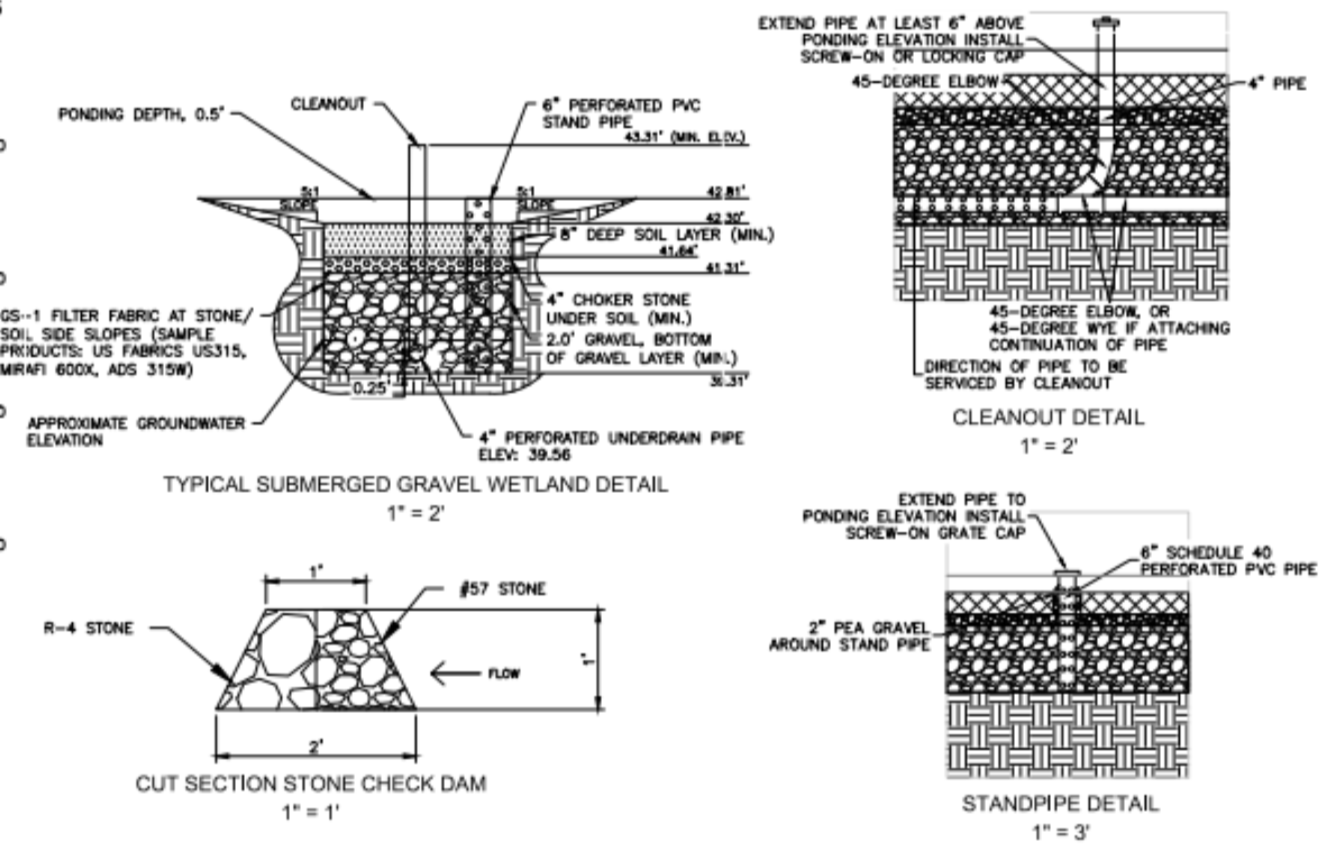
A submerged gravel wetland is a nature-based stormwater system designed to filter runoff before it reaches nearby waterways. It works by slowing down and storing water, allowing it to soak in and pass through layers of gravel and engineered soil where natural processes remove pollutants like nutrients and sediment.
As development increases around Delaware’s Inland Bays—Rehoboth Bay, Indian River Bay, and Little Assawoman Bay—more hard surfaces like roads, rooftops, and driveways prevent water from soaking into the ground. This causes stormwater to move faster and carry more pollution into local waterways.
SGWs are designed to mimic the look and function of natural wetlands – without any above ground standing water. Water is collected in spaces within the gravel and soil layers, where naturally occurring microbes help break down pollution and prevent it from getting into local waterways.
By combining natural filtration with biological treatment, SGWs provide a simple, low-impact solution that helps improve water quality and protect aquatic habitats.
Submerged Gravel Wetlands provide a straightforward, sustainable way to manage stormwater and protect local waterways.